
Introduction
“The increase and use of text messaging by both patients and doctors reflects the evolution of the medical practice as well as the value of different communication channels in developing and maintaining relationships with patients.”
— Jennifer M. Schwer, 2006
Jennifer M. Schwer described text messaging as a “growing phenomenon.” For a busy dental office, simple communication matters because staff and patients both have limited time. The pandemic also showed how useful messaging can be when practices need to reduce unnecessary in-person contact.

What Is Two-Way Texting?
Two-way texting enables people to send, receive, and reply to messages. For dental practices, it creates a direct channel for alerts, appointment reminders, confirmations, patient questions, and SMS campaigns.
Text Messaging Statistics
These figures show why texting attracted the attention of marketers and service businesses. The original article referenced 44 Mind-Blowing SMS Marketing and Texting Statistics.
- 64% of customers wanted to use text messaging to make or update a reservation.
- Five billion people globally sent and received SMS messages—about 65% of the world’s population at the time.
- 85% of customers preferred receiving text messages over a phone call or email.
- 92% of U.S. adults carried text-enabled phones, while only 14% of companies texted with consumers.
- SMS open rates were reported as high as 98%.
Benefits of Text Messaging for Dentists
- Patient preference. Many patients find a short text easier to manage than a phone call or email. Two-way texting lets them respond on their own time.
- Business convenience. Staff can send appointment information through one messaging platform, and patients can confirm without calling the office.
- Time savings. Instead of calling patients individually, the team can send the same timely update to the appropriate patient group.
- An effective communication channel. Messages can be sent and received from different locations, making it easier to handle routine updates.
- Improved security and oversight. A unified practice channel reduces the need for staff to communicate from personal phone numbers.
- Better patient experience. Direct, responsive communication can help patients feel heard and strengthen their relationship with the practice.
- Practice growth. Convenient communication can improve loyalty, reduce scheduling friction, and support a healthier patient relationship.
Where Do Dental Practices Use Texting?
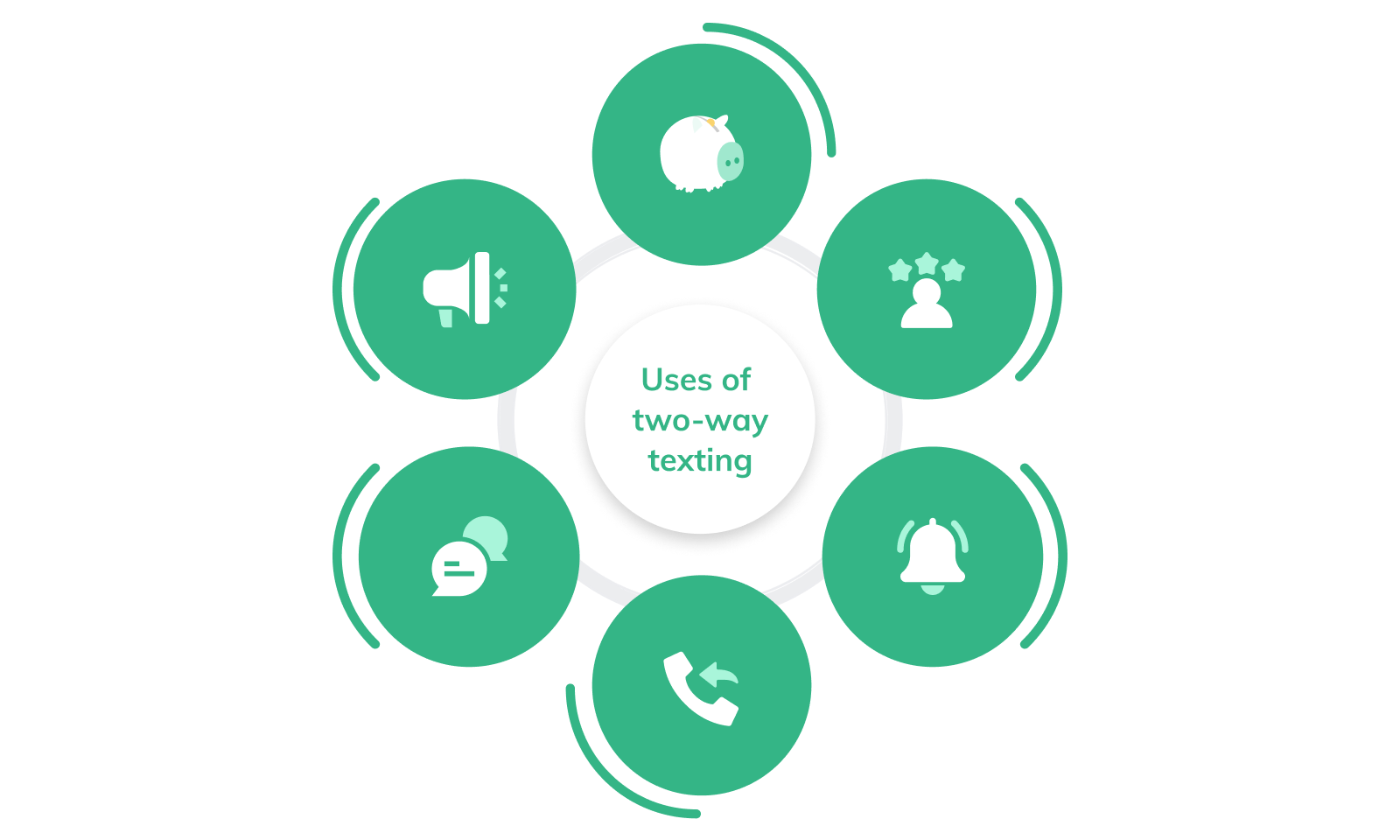
- Appointment reminders. Confirmation texts are one of the most common uses. They help reduce no-shows and give patients a quick way to respond.
- Scheduling conflicts. When a schedule changes, texting everyone affected is more efficient than calling each patient individually.
- Urgent situations. Texting can provide a fast channel for time-sensitive messages, although clinical emergencies should always follow the practice’s established emergency protocol.
- Review requests. A post-visit text can make it easier for patients to share genuine feedback on Google, Yelp, or Facebook.
- Quick answers. Patients can ask routine questions without waiting on hold, and the office can respond when a team member is available.
- Contactless check-in. Texting can reduce waiting-room congestion and unnecessary touchpoints by coordinating arrival and check-in.
Landline Texting
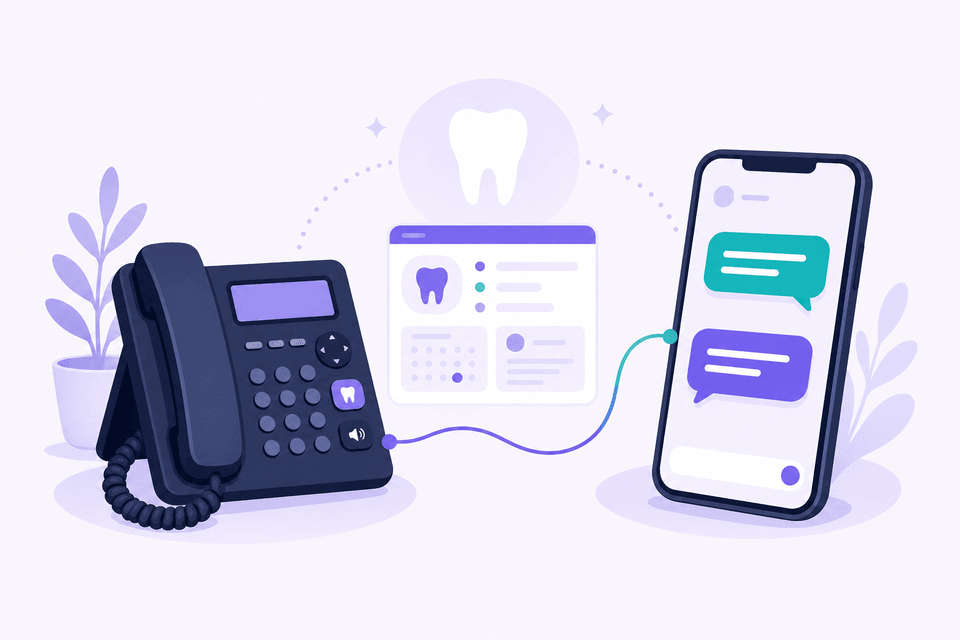
A text-to-landline service lets a practice send and receive texts, alerts, confirmations, reminders, and campaigns using an existing landline, VoIP, or toll-free number. Adding text capability to the office number gives staff and patients more flexibility without introducing an unfamiliar contact number.
How PracticeDilly Helps with Dental Text Messaging
Finding the right patient engagement platform is an important part of starting two-way texting. The system should give the team a clear, manageable workflow rather than adding another disconnected inbox.
PracticeDilly provides a messaging dashboard where dental teams can send and receive text messages and share documents and pictures with patients.
You can also access the message board and respond through the PracticeDilly mobile app. The app notifies you when a message arrives, helping the team stay connected away from the front desk.
Patient conversations should be handled through secure workflows that support the practice’s privacy and HIPAA responsibilities.
Learn more about using our patient engagement platform to deliver timely messages and keep patients updated.
Make patient communication easier
See how PracticeDilly brings two-way texting, reminders, and patient messages into one workflow.
Book a Demo