
Introduction
Imagine your office is running a whitening promotion. Your front-office team selects the entire patient list and sends a mass text to 3,800 patients. A few days later, the billing report shows a spike in messaging costs, even though the promotion generated only 40 replies.
Carrier fees and industry regulations have pushed business texting costs higher. Every practice has patients who are no longer active, have outdated numbers, or have no reason to respond. Sending every campaign to the entire database can increase costs without improving results.
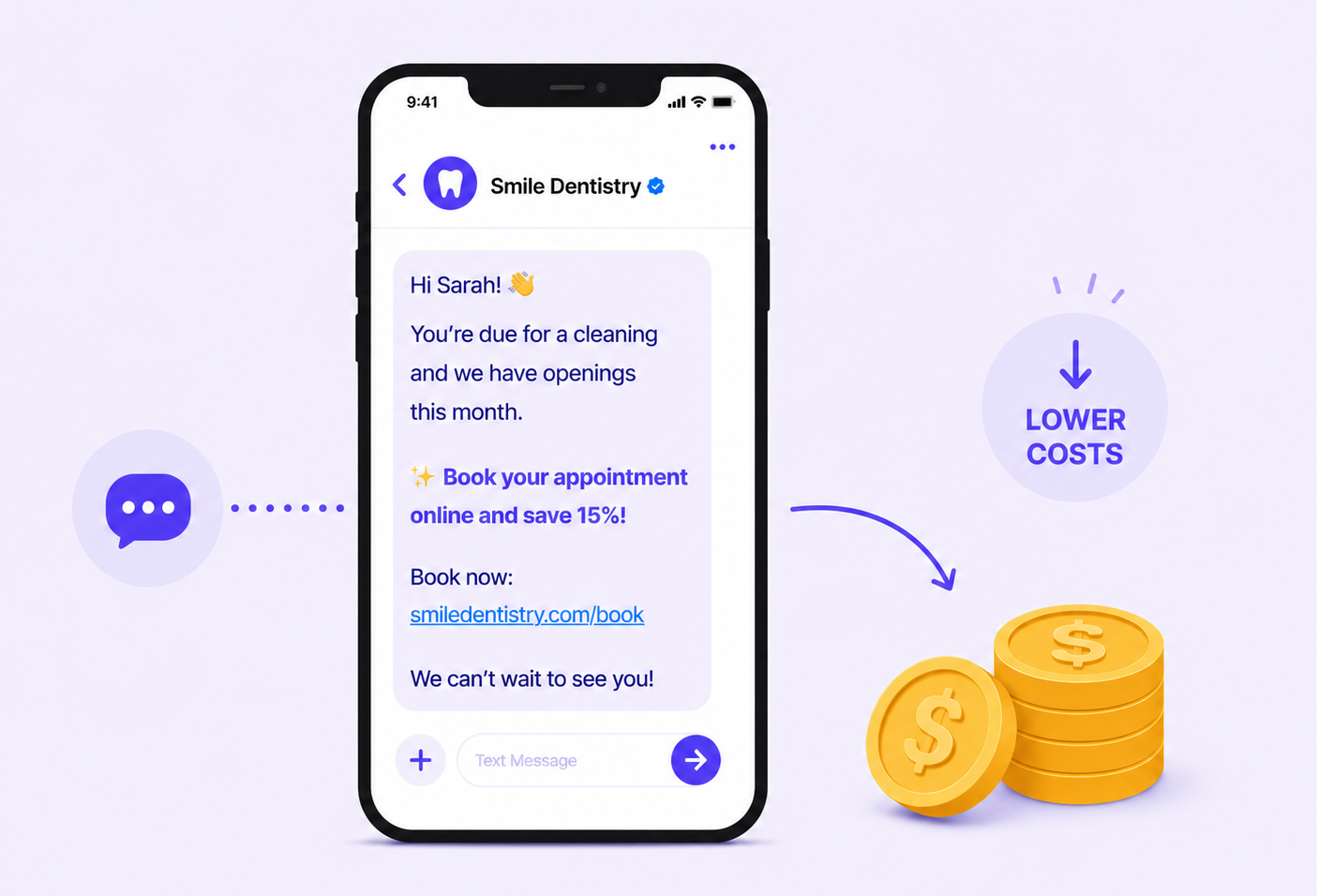
How can dental offices reduce mass texting costs?
How should I use date-range filters to reduce texting costs?
Instead of messaging everyone, focus on patients who have been active within a useful time frame:
- Last 12 months: currently active patients who are a good fit for time-sensitive promotions.
- Last two years: active patients and those who have not visited recently, making this group useful for recall reminders.
- Two to three years: patients who have been away longer and may need a separate reactivation message.
A practice with 4,000 patients filters a seasonal promotion to people who visited within the last two years. The list drops to 2,400 active patients, making the campaign more relevant and considerably less expensive.
Why should I target patients due for appointments specifically?
When the goal is to fill open appointment slots, patients who are due or overdue are the strongest audience. They already know the practice, have a current reason to schedule, and are more likely to respond.
A patient who had a cleaning two months ago is unlikely to act on a recall offer. A patient who is six months overdue has a clear reason to respond.
| Campaign type | Best target segment | Response potential | Cost efficiency |
|---|---|---|---|
| Recall reminder | Patients overdue for hygiene | High | Excellent |
| Seasonal promotion | Active patients from the last 1–2 years | Moderate–High | Good |
| Age-specific promotion | Relevant active age group | Moderate | Good |
| Entire database | Everyone | Low | Poor |
| Inactive patients | Everyone inactive for 3+ years | Very low | Poor |
How does keeping texts short reduce costs?
Text billing is generally based on message segments. A standard text supports up to 160 characters. When a 200-character message is divided into two segments, both segments are billed even though the patient sees one message.
Short messages are also easier to read and act on. Use one clear offer, one direct call to action, and only the information needed for the next step.
How does age-range filtering help with promotional campaigns?
Not every treatment interests every patient. Age-range filtering helps each promotion reach the people most likely to find it useful.
- Invisalign promotions often generate more interest among younger and middle-aged patients.
- Implant promotions are generally more relevant to older patients.
- Whitening and cosmetic offers often resonate with working-age adults.
Texting the right people—not everyone—is what lowers costs while still getting results from each campaign.
How do I keep my patient database clean to lower texting costs?
Patients may stop visiting while their records remain active. Regularly marking inactive patients prevents future campaigns from including contacts who are unlikely to respond.
- The patient told your office they are transferring or leaving.
- The patient moved outside your service area.
- Messages have gone unanswered or undelivered for a long time.
- The phone number no longer works or is invalid.
A quick review every few months is enough for many practices. Offices that send a large volume of messages may benefit from a brief monthly review.
Conclusion
These strategies work best together. Date range, appointment status, and age filters reduce the campaign list. Database maintenance removes people who should no longer receive campaigns. Short messages lower the cost of each send. The result is a smaller, less expensive campaign that reaches patients who are more likely to respond.
Frequently asked questions
Will sending fewer messages reduce patient engagement?
Not necessarily. A targeted campaign can outperform a broad campaign because recipients are more likely to find the message relevant.
How often should I clean the patient database?
Every few months works for most practices. High-volume offices may benefit from a quick monthly review.
Does message length really affect campaign cost?
Yes. Messages beyond the character limit are divided into multiple billable segments.
Are there rules for dental-office mass texts?
Yes. Patient texting is subject to consent, privacy, and communication requirements. Use a healthcare-focused platform and follow the rules applicable to your practice.
Send more focused patient campaigns
See how PracticeDilly helps dental teams reach the right patients without relying on one oversized list.
Explore Campaigns & Promotions